
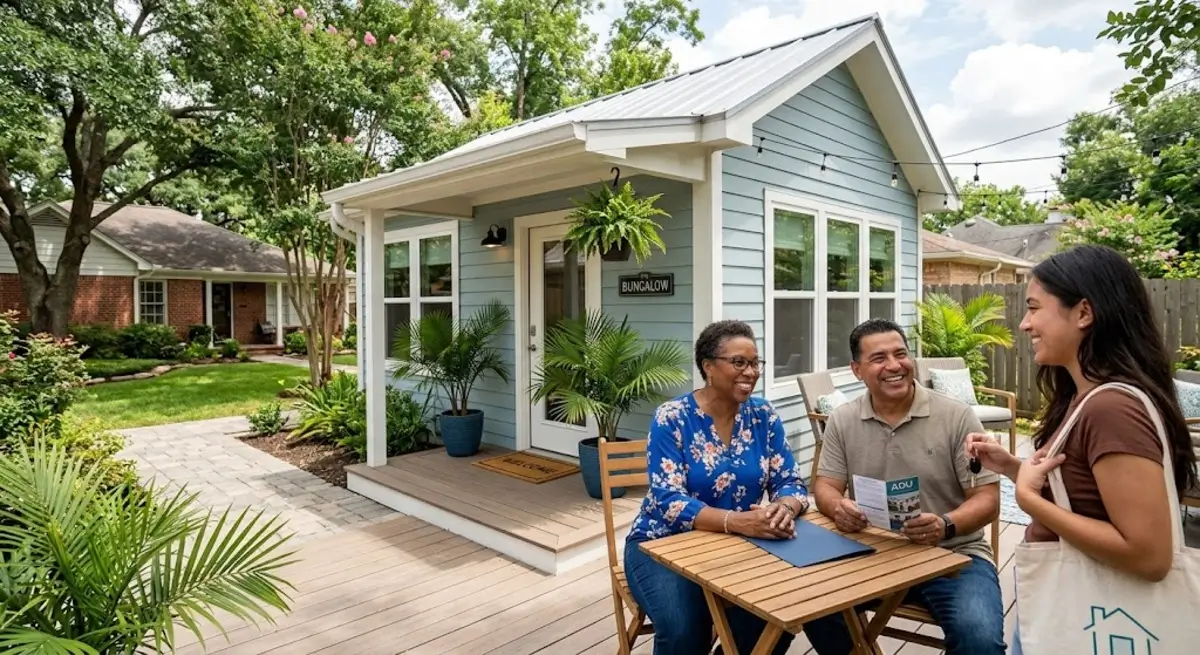
Plenty of Northwest Houston landlords are sitting on a garage, a spare side yard, or a corner lot that hasn't produced a dollar in years. Adding a second unit changes that, and it fits naturally into a broader approach to protecting your Houston investment, since it grows what a property earns without adding new land to the equation.
Financing a second property has become a harder sell as rates climbed, so more owners are directing that budget toward improving what they already have. A second unit captures that shift well, turning existing square footage into a second lease instead of stretching toward another mortgage.
Key Takeaways
- Northwest Houston owners can add a second income stream without buying additional land.
- Faster local approval processes have made these projects more predictable in recent years.
- A well-placed second unit can raise both monthly cash flow and resale value.
- Financing, taxes, and ongoing costs all shape the real return on the project.
- Professional guidance helps owners avoid permitting delays and tenant placement mistakes.
What Turns a Garage Into a True Rental Unit
A second structure only counts as a rentable unit once it meets a handful of specific conditions. Here's what typically separates a real rental from a simple room addition.
- A private entrance the tenant uses without walking through the main house.
- A full kitchen, not a shared or partial setup.
- A dedicated bathroom on its own plumbing line.
- Separate utility metering, or a clearly documented split arrangement.
- A layout that could pass inspection as an independent living space.
Owners exploring this path are part of a broader national shift. Research compiled by the Mercatus Center found that nearly 1 in 5 residential units produced in California today is a second unit on an existing lot, a scale that has pushed cities across several states, Houston included, to streamline their own review processes.
A Spring Branch Owner Adds a Second Lease
We worked with an owner in the Spring Branch area who had a detached garage sitting unused while her main house produced a single rent check each month. She converted the space into a compact one-bedroom unit with its own entrance and kitchen, and had a signed lease within weeks of listing it.
Her lot size stayed exactly the same. What changed was how she used the space already sitting on her property, and that outcome is one plenty of Northwest Houston landlords could see on their own lots once the numbers are laid out clearly.
Running Two Units Means Managing Two Systems at Once
Once construction wraps up, the new unit starts generating rent on its own schedule, separate from the main house. Keeping your ongoing accounting needs organized across both units becomes essential at this stage, since two tenants means two due dates, two ledgers, and two sets of expectations to track.
| What Doubles | What It Means for You |
|---|---|
| Lease agreements | Separate terms, renewal dates, and rent amounts |
| Tenant screening | A full background and rental history check for each applicant |
| Bookkeeping | Income and expenses tracked apart from the main home |
| Maintenance calls | Repairs and upkeep now apply to two structures |
Owners who plan for this early avoid the confusion that comes with treating a second unit like an afterthought. It deserves its own lease terms, its own screening process, and its own maintenance schedule from day one.
Location Inside Northwest Houston Still Shapes the Payoff
Not every neighborhood in Northwest Houston offers the same rental demand, so where your lot sits still matters even within the same metro area.
| Factor | Why It Matters |
|---|---|
| Proximity to job centers or medical campuses | Shorter commutes support stronger, steadier demand |
| Access to major roadways | Speeds up lease-up for commuting renters |
| Lot shape | Determines whether a garage conversion or detached unit fits |
| Setback rules | Affects where a unit can legally sit on the lot |
Staying current on real estate trends shaping the local market can help owners time a build for when demand and construction costs both work in their favor, rather than reacting after the fact.
What Building and Running a Second Unit Actually Costs
A second unit represents a genuine financial commitment, and owners deserve a clear answer about whether it pays off before breaking ground.
Financing Options to Weigh
Most owners finance a second unit through one of a few common routes. A guide on financing options built specifically for local investors can help narrow down which structure fits your situation best.
- Home equity, which usually carries the lowest rate but ties up existing equity.
- A construction loan, built for the build phase and converted afterward.
- A cash-out refinance, which restructures your existing mortgage to fund the project.
Ongoing Costs to Track Separately
Rental income from the unit is taxable, and expenses like insurance, maintenance, and utilities need their own line item rather than getting folded into the main home's budget. Owners who want a clearer sense of what their property could earn can request a complimentary rental evaluation, which lays out realistic rent expectations based on comparable properties nearby.
The Resale Boost Backs Up the Cash Flow Gains
A garage conversion does more than add monthly rent, and the appraisal data supports that directly. The Federal Housing Finance Agency tracked a median appraised value of $1,064,000 in 2023 for California properties with a second unit, compared to $715,000 for properties without one. That gap shows how much resale value a second structure can add, even when the lot itself hasn't grown by a single square foot.
Owners weighing whether their property is priced and performing correctly might also benefit from reviewing the calculations behind accurately valuing an investment, since a second unit often changes what counts as a strong return on the whole property.
Deciding If the Project Fits Your Goals
Start with what you actually want the property to do for you. Higher monthly income without a second purchase is worth serious consideration for most owners weighing their next move. If your lot, budget, or timeline still feel uncertain, that uncertainty is a good reason to get informed guidance before spending money on plans.
Owners exploring their options can find helpful background through our resources built for owners, covering many of the questions that come up before, during, and after a project like this one.
FAQs about ADUs as a Rental Income Strategy in Houston, TX
How much does a typical garage conversion cost compared to a detached new build?
Garage conversions generally run less expensive since the structure and foundation already exist. Detached new builds cost more but often allow for a larger footprint and more design flexibility depending on the lot.
Do I need special insurance once I add a second rentable unit?
Most standard landlord policies need to be updated once a second unit is added, since coverage limits and liability exposure change. Checking with your insurer before construction starts helps avoid coverage gaps later.
Can I convert an existing structure like a pool house instead of building new?
Yes, provided the structure can meet code requirements for a kitchen, bathroom, and separate entrance. Older structures sometimes need electrical or plumbing upgrades to qualify as a legal rental unit.
Will adding a second unit change my homeowners insurance premium significantly?
Premiums typically rise somewhat to reflect the added structure and rental exposure, though the increase is usually modest compared to the extra rent collected. Your insurer can provide an exact quote beforehand.
How do I decide between renting the new unit short-term or long-term?
Local ordinances and HOA rules often dictate which option is even available. Long-term leases provide more predictable income, while short-term rentals can earn more per night but require closer management.
More Rent From the Same Address
A garage that sits empty every month is a missed opportunity most Northwest Houston owners can fix without buying another property. Converting that space into a second unit adds rent now and value later, and the current mix of financing options and streamlined approvals makes the timing better than it's been in years.
PMI Northwest Houston guides owners through the entire process, from market analysis and tenant screening to lease preparation and ongoing accounting for both structures on the property.
Find out what your lot could realistically earn with our investment property calculator before you settle on a design.
